






The 50:26 "Iron Bone" Legend: How KOFON's Planetary Joints Forged the Physical Foundation of a Half-Marathon Champion
Time:2026-05-06, Visits:
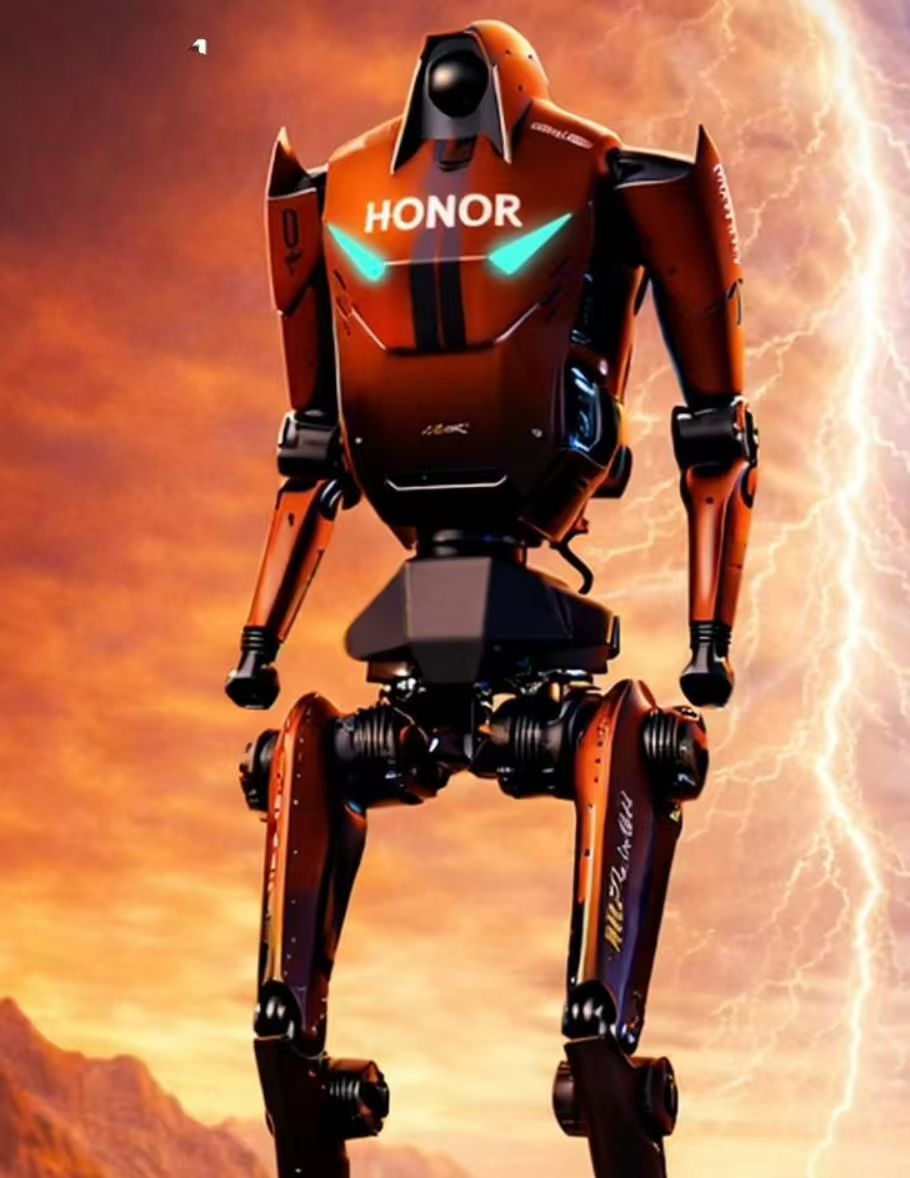
April 19, 2026, Beijing E-Town. When Honor's "Flash" robot crossed the half-marathon finish line with a net time of 50 minutes and 26 seconds, shattering the human world record, it wasn't just a victory for AI algorithms. It was an ultimate stress test of precision mechanical transmission. Inside that red exoskeleton, the "knee" and "hip" joints supporting its 21.0975 km high-intensity sprint were actuation modules crafted by KOFON, based on aerospace-grade precision planetary reduction technology. This triumph was not merely about speed, but a paramount breakthrough of physical laws at the levels of materials and structure.
I.The Marathon: A "Hellish" Trial for Joints
A humanoid robot running a marathon presents challenges far exceeding industrial scenarios. This is not uniform production-line motion, but extreme operating conditions encompassing explosive starts, load-varying uphill/downhill runs, and sudden stops and turns. For the supporting joints below the waist, this means:Extreme Impact Loads: Each footfall requires joints to withstand impacts several times the body's weight; Continuous Heat Accumulation: Tens of thousands of high-torque outputs generate massive heat within a confined space; Absolute Reliability: The 21 km course allows for zero missteps or gear slippage.
Traditional general-purpose joints are ill-suited. KOFON's solution was to adapt planetary reduction technology used in high-reliability aerospace applications, "brutally reinforced" for transplantation into humanoid robot lower limbs.
II.Breaking Physical Limits: "Heavy-Duty Design" from Materials to Structure
To handle marathon-level loads, KOFON implemented triple-layer extreme reinforcement at the physical level of the joint modules:
Material Level: The Philosophy of "Hard Outside, Tough Inside" with 20CrMnTi
Lower limb joints (hip, knee) require both wear and impact resistance. KOFON insists on using 20CrMnTi carburizing alloy steel as the core material for sun and planet gears. Through precise heat treatment, gear surface hardness exceeds HRC 60, ensuring the tooth profile remains intact after tens of thousands of friction cycles. Meanwhile, the gear core maintains high toughness, specifically to absorb impact energy at the moment of foot strike, preventing tooth breakage risks from being "hard yet brittle." This is the microscopic foundation enabling "Lightning's" stable run on complex road surfaces.
Structural Level: The "Torque Density" Advantage of Planetary Reduction
Delivering massive torque within the limited space of a joint is key to a robot's explosive power. KOFON employs a high reduction ratio planetary gear train design. Compared to other transmission methods, the planetary structure offers higher torque density and rigidity. This allows "Lightning" to instantaneously output torque as high as several hundred Newton-meters during starts and uphill runs, with near-zero backlash, ensuring immediate and accurate power transmission.
Thermal Management Level: The Co-developed Liquid Cooling System
Fifty minutes of full-power output generates devastating internal heat. For this, KOFON and Honor co-developed an integrated, high-efficiency liquid cooling system. This system embeds cooling channels directly inside the joint housing, creating an enveloping heat dissipation effect that rapidly carries away massive heat generated by the motor and gear friction. It was this system that ensured "Lightning's" joints maintained a stable operating temperature throughout the race, with no torque output degradation, allowing it to retain sprint-like explosive power even in the later stages.
III.The "Invisible Champion" Behind the Champion: System-Level Assurance of Precision Transmission
"Flash's" championship is a victory for HONOR in algorithms and control, and equally, a victory for KOFON in foundational mechanical architecture.
The Confidence of Zero Failures: Thanks to the load-sharing characteristics of the planetary structure (multi-tooth meshing) and the fatigue resistance of 20CrMnTi material, KOFON joints achieved zero failures throughout tens of thousands of cycles. In the marathon's latter half, when many robots exhibited unstable gaits due to joint wear, "Flash" maintained the mechanical precision it had at the start.
The Value of Rigidity: High torsional rigidity means the robot's foot doesn't "slip" upon landing due to joint deformation—the physical prerequisite for maintaining balance during high-speed running.
50:26—this figure is not only a milestone for Honor's "Flash" but also a milestone for planetary transmission technology in high-dynamic, high-impact humanoid robot applications. By fusing aerospace-grade reliability engineering, impact-resistant gearing structures, and cutting-edge cooling technology co-developed with Honor, KOFON has demonstrated that on the path to general-purpose humanoid robots, a sturdy, reliable, and durable physical body is equally as important as a smart "brain." As "Flash" crossed the finish line, every step it took echoed with the unwavering answer of precision mechanical transmission technology to the laws of physics.